
Per-request pricing in GitHub Copilot worked well when each request was a simple, one-shot completion. But with the rise of agents, that model no longer holds. A single agent task can now run for minutes, consuming far more compute resources than a human developer would typically use in a month.
This mismatch led to major changes in GitHub Copilot’s Individual plans, including Student, Pro, and Pro+, on April 20, 2026. While the reasoning behind these updates is clear, the real impact becomes apparent only when you look closer. In this blog, we’ll explore the key details in the announcement and how they could affect when and how you use GitHub Copilot.
What’s Changing in GitHub Copilot Student, Pro, and Pro+ Plans
As GitHub Copilot continues to expand its agent capabilities, GitHub is introducing the following changes to ensure service quality and stability for all users.
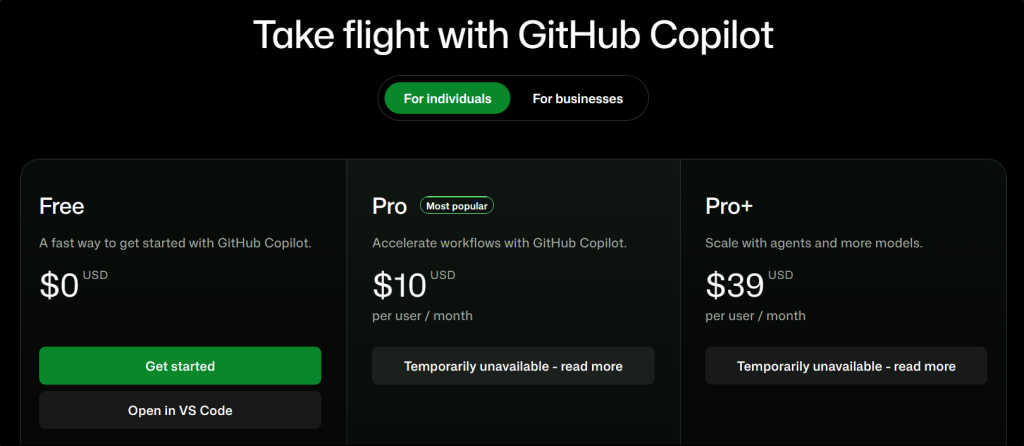
New Sign-ups are Paused for Paid Individual Plans
Starting April 20, 2026, GitHub has paused new sign-ups for the Student, Pro, and Pro+ plans. New users can currently only sign up for the Free tier. Existing paid subscribers can continue using their plans without interruption. GitHub has not yet announced a date for when this pause will be lifted.
Stricter Usage Limits Across Plans
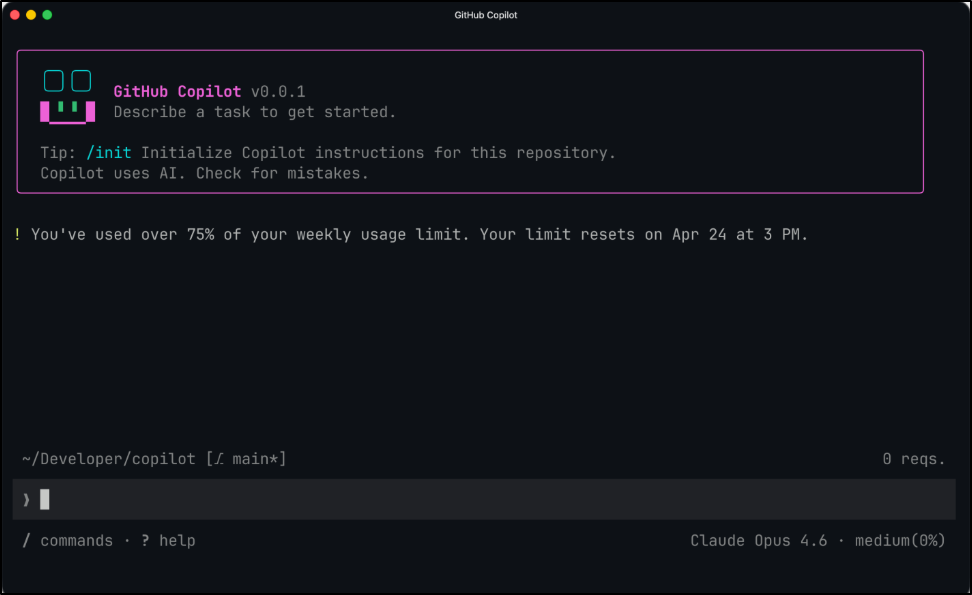
Along with pausing new sign-ups, GitHub has restructured usage limits to better manage increasing demand. These limits now operate at two levels:
- Session Limits: These may occur during peak usage or when the service is overloaded. If you hit a session limit, you must wait until the usage window resets to use Copilot.
- Weekly Limits: Each plan now has a specific weekly cap. If you hit this limit, you must wait until the following week for a reset. However, if you still have premium requests remaining, you can continue using Copilot via auto model selection (which typically switches to a lower-compute model). To improve limit transparency, you can see the available weekly usage limit in VS Code and Copilot CLI.
Removal of Opus Models from Standard Pro Plan
GitHub is streamlining its model offerings. The Claude Opus 4.5 and 4.6 models are being removed from individual plans. The latest Claude Opus 4.7 (released April 16, 2026) is now available exclusively for Pro+, Business, and Enterprise users.
- This high-reasoning model comes with a 7.5× premium request multiplier, meaning it consumes your usage quota significantly faster than standard models.
- Compared to the previous 3× multiplier for Opus 4.6, this represents a 2.5× increase in usage consumption. As a result, weekly limits may be reached sooner than before.
- For Pro+ subscribers who were already operating near their previous limits, this change means they are likely to hit the new cap much earlier in the week.
Here’s a quick comparison of model availability after the update:
| Model | Pro | Pro+ |
| Opus 4.7 | ❌ | ✅ (now 7.5x premium request multiplier) |
| Opus 4.6 | ❌ | ❌ (removal date undocumented) |
| Opus 4.5 | ❌ | ❌ (removal date undocumented) |
| Other models (Sonnet, GPT, Gemini, Claude, etc.) | ✅ | ✅ |
While these changes feel destructive for users, GitHub explains that they are necessary to deliver a more predictable and high-quality experience for existing customers.
How to Prepare for the GitHub Copilot Individual Plan Changes
The recent updates to GitHub Copilot might feel disruptive, but there are clear paths forward depending on your workflow. Here is what you can do to navigate these changes.
1. Upgrade to Pro+ if You Need High-Reasoning Models
Standard Pro subscribers ($10/month) have officially lost access to all Claude Opus models. If your agentic workflows rely on Opus for complex tasks, you must upgrade to the Pro+ plan. Pro+ is $39/month, roughly a 4x increase over the standard Pro plan. In addition to Opus access, Pro+ offers more than 5X the usage limits of the standard Pro plan.
2. Request a Refund (Limited Time)
If the new limits broke your workflow, you have until May 20 to cancel and receive a prorated refund for the time remaining on your subscription. That’s a fair option, but there’s an important detail many users overlook.
Once you cancel a Pro or Pro+ subscription, you cannot re-subscribe to a paid Individual plan until GitHub lifts the sign-up pause.
In other words, cancellation is a one-way exit during this period. The only documented exception applies to certain verified students.
How to Cancel GitHub Copilot Subscription
To cancel your subscription and request a refund in GitHub Copilot, follow these steps below in GitHub:
- Click your profile picture (top-right corner) and select Settings.
- Go to Billing and licensing → Licensing and click Manage subscription.
- Select Cancel and refund subscription to cancel the GitHub Copilot subscription.
Note: This option is available only until May 20.
3. Strategic Ways to Avoid Hitting Limits
Since usage is now more strictly monitored via session and weekly caps, you can stretch your “budget” by following these steps:
- Switch Models: Use models with smaller multipliers (like GPT-4o mini, Gemini 1.5 Flash, or Claude 3.5 Sonnet) for simpler tasks like writing comments or unit tests.
- Monitor in Real-Time: Use the new usage meter integrated into VS Code and the Copilot CLI to track how close you are to your weekly cap.
- Reduce Parallel Workflows: High-compute tools (like /fleet) use significantly more tokens. Use them sparingly if you are nearing your session limit.
How the GitHub Copilot Plan Changes Affect Different Users
The recent updates to GitHub Copilot don’t impact everyone the same way. Depending on your current subscription status or eligibility, your available options—and restrictions—can vary significantly.
The table below breaks down what each type of user can expect after April 20, including what has changed, what actions are still available, and what limitations now apply. Use this as a quick reference to understand where you stand and what your next step should be.
| User Type | Status After April 20 | Can Still Do | Cannot Do |
| Existing Pro subscriber | Lost Opus access; new usage limits | Upgrade to Pro+; cancel and refund (until May 20); downgrade to Free | Use Opus on Pro |
| Existing Pro+ subscriber | Lost Opus 4.5/4.6 (date TBD); 7.5x multiplier on Opus 4.7 | Stay; downgrade to Pro; cancel and refund | Use Opus 4.5 or 4.6 (after the removal date) |
| Existing Student plan subscriber | Subscription continues | Stay; convert to Pro/Pro+ as verified student | (Nothing locked) |
| Verified Student | Cannot activate the Student plan during the sign-up pause | Wait for the pause to lift | Use the 2-year benefit window during the pause |
| Copilot Free user | Unaffected for daily use; locked out of upgrade | Continue Free | Upgrade to Pro/Pro+ during pause |
| New user (no plan) | Cannot sign up for Pro/Pro+/Student | Sign up for Copilot Free | Sign up for any paid Individual plan |
What’s Your Move Before May 20?
The changes to GitHub Copilot plans make one thing clear: your options now depend heavily on your current status and the timing of your actions. For existing subscribers, flexibility still exists. You can upgrade, downgrade, or request a refund (within the allowed window). For students, eligibility hinges on when verification was completed, making early access a key advantage. Meanwhile, new users and free-tier users face the most restrictions, with no immediate path to paid plans.
In short, this isn’t just a pricing or feature update; it’s a shift that requires careful decision-making. Before making any changes, it’s worth evaluating your current usage, future needs, and whether switching plans or holding your position is the smarter move.